The free trainer is your 12 major scales — straight up and down, every key, until they're fluent. Everything deeper lives here, each one in this same simple format.

Founding faculty and first-category Professor at the Lebanese National Higher Conservatory of Music since 1994, Selmer Paris artist, and Principal Saxophonist of the Lebanese Philharmonic Orchestra. Jazz studies at the University of Minnesota; classical study with Alain Bouhey at the École Normale de Musique de Paris.
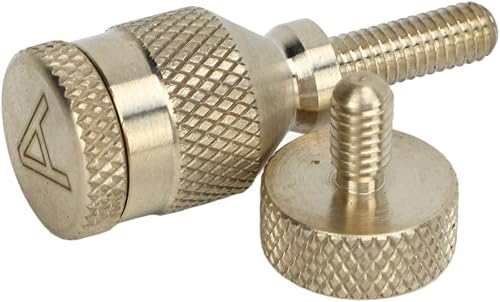
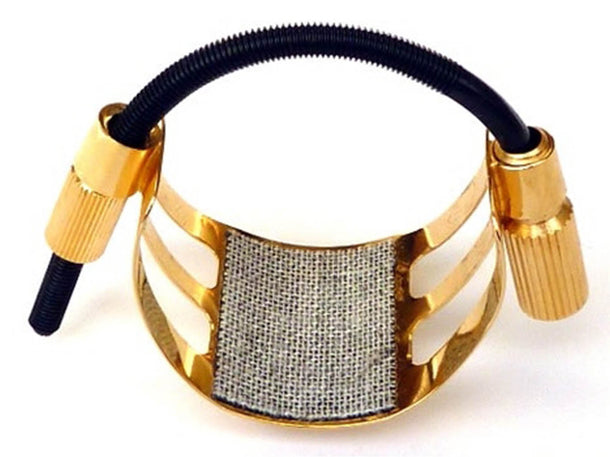
My own gear — what's actually on my saxophone. As an Amazon Associate, I earn from qualifying purchases.
Prices shown as of last check — always confirm current price on Amazon.
A stand is not a substitute for a case. Never leave a saxophone unattended on a stand — not on stage, not even in a private practice room. Anyone can walk in, bump it, and it can hit the floor. When you leave the room, the horn goes in its case.
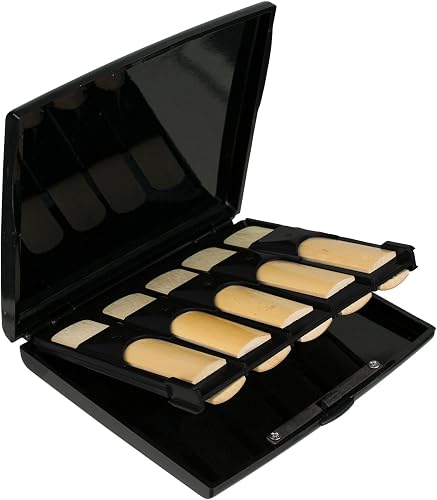
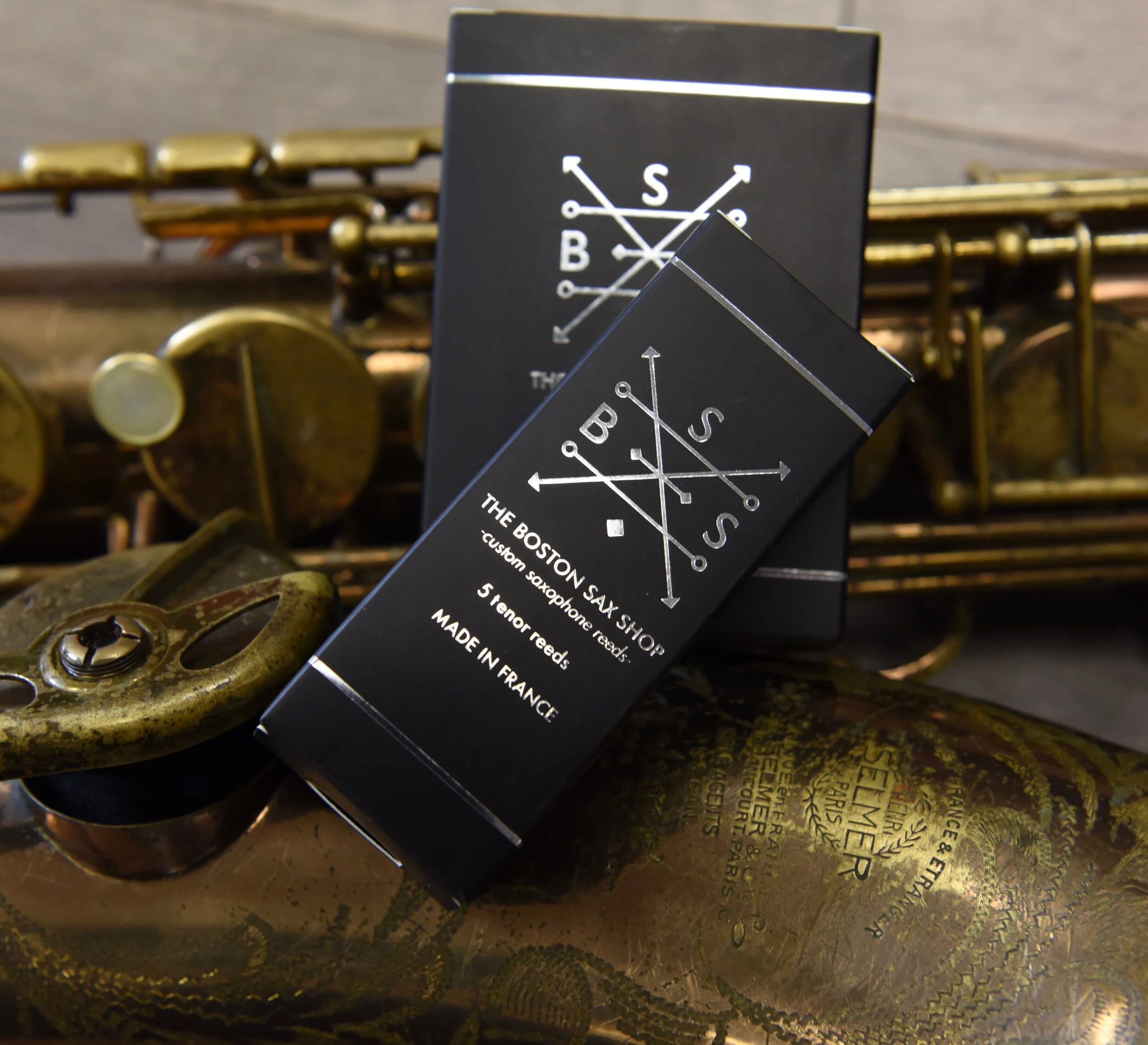
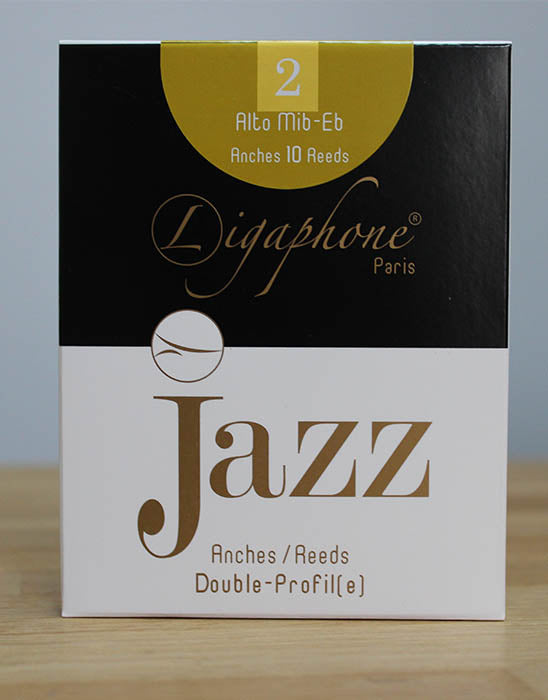
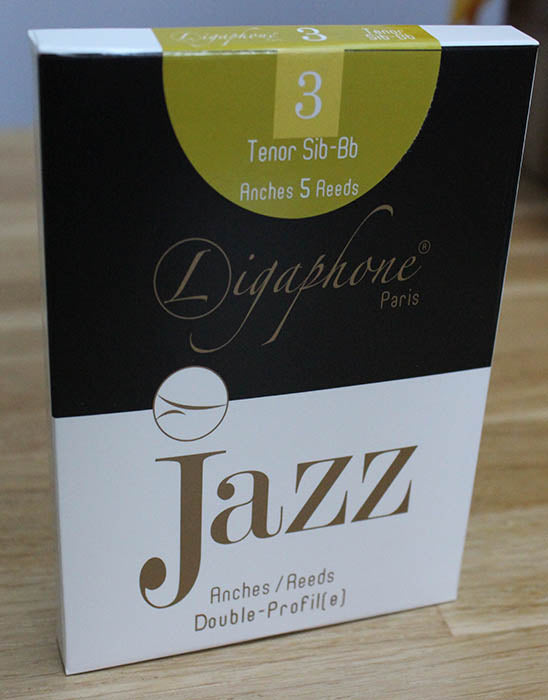
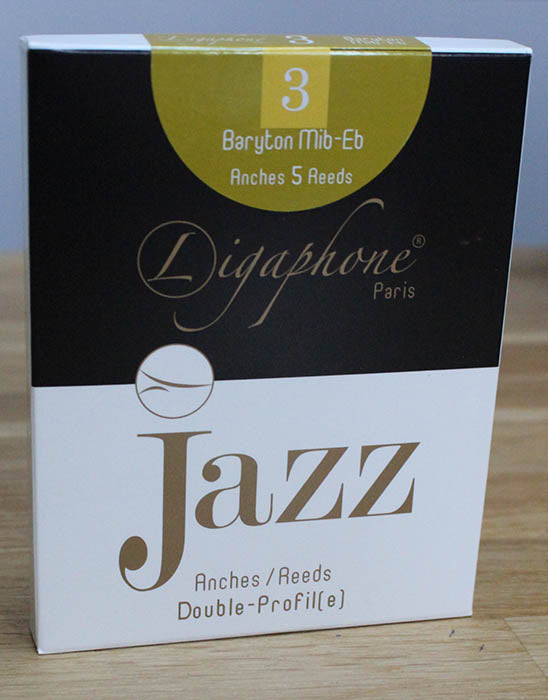
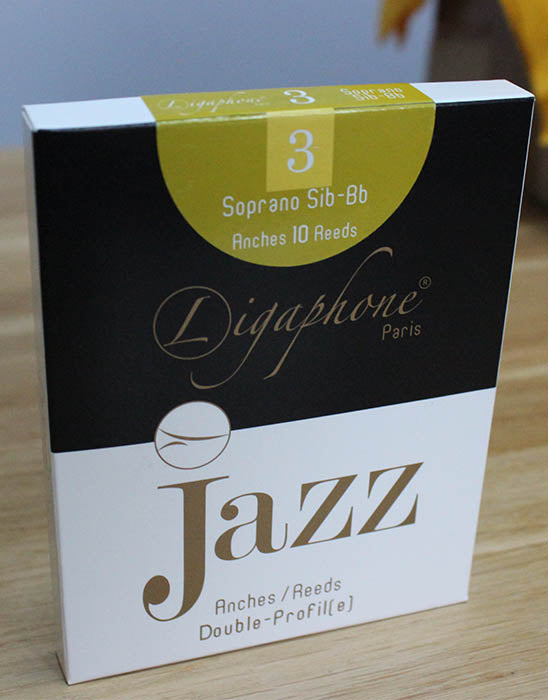
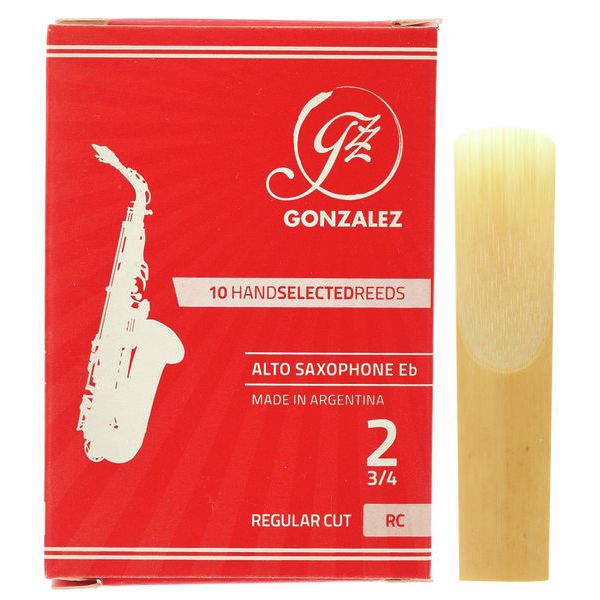
Over the years I've tried more reed brands than I can count — the ones below are the ones I've kept coming back to. If I had to rank them: Boston Sax Shop is a 10, and it's not close — nothing lasts longer. Ligaphone and Gonzalez are both a 9. Vandoren's Traditional ("blue box") deserves a mention too — it's excellent on the right mouthpiece, especially the Selmer Concept, even though it didn't make my top three. (I left Vandoren's V16 reeds off this list, but they're great as well.)
Prices shown as of last check — always confirm current price on the vendor's site.
Not what I play myself — but a cheap, playable option I suggest to students who go through reeds quickly.
What's actually on my desk — the computer side of the studio.
Prices shown as of last check — always confirm current price on Amazon.
Shop — saxophone
Alto Sax · Tenor Sax · Baritone Sax · Soprano Sax
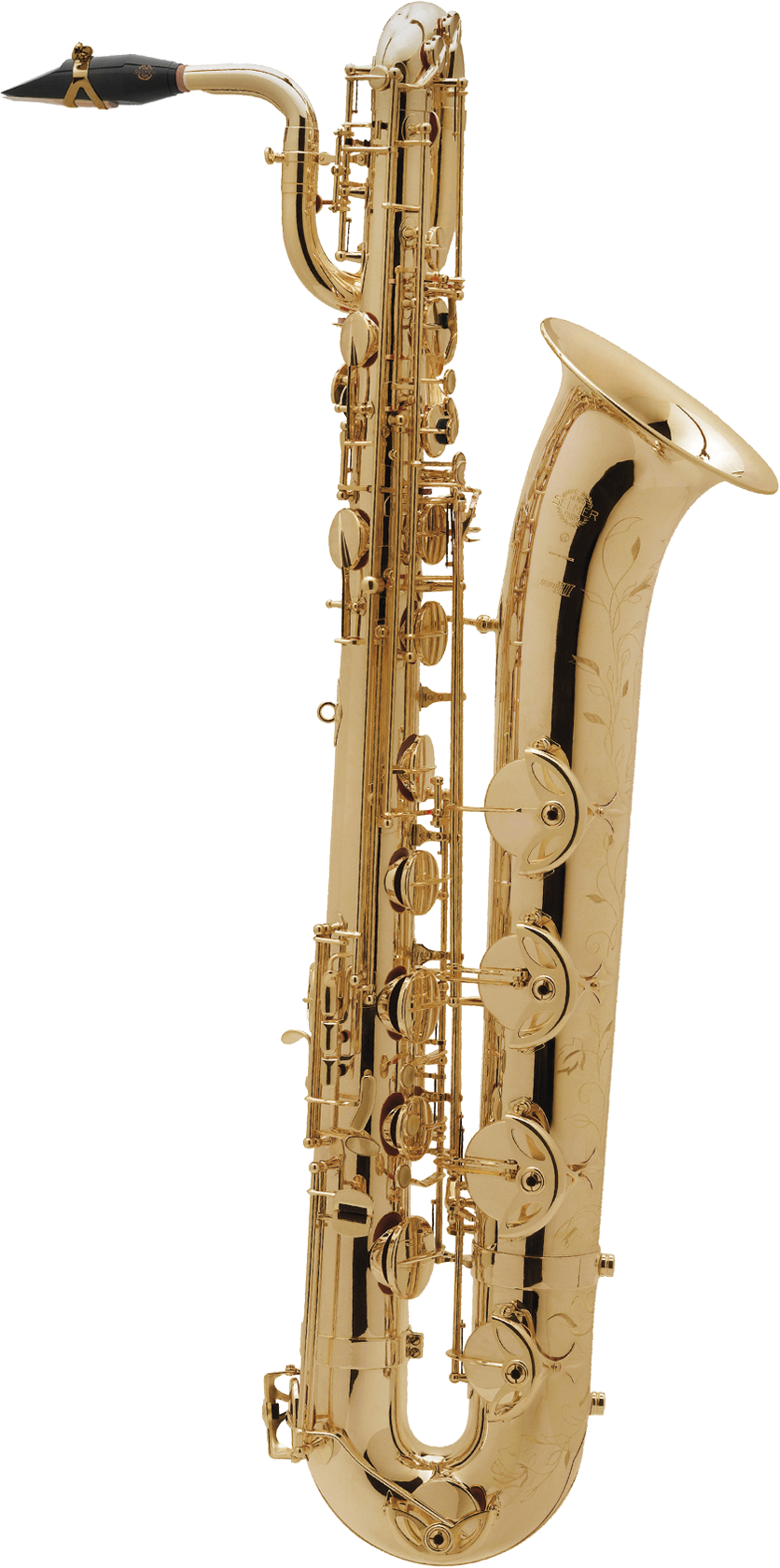
If you're feeling whimsical and money isn't the obstacle — this is on Amazon right now.
I'm a Henri Selmer Paris artist, and I think everything they make is extraordinary. If you have the means and want to research it properly, start here.
All Selmer saxophone mouthpieces ↗
Selmer reeds ↗
Selmer necks (bocals) ↗ — I've personally flown from Beirut to Paris just to try different necks. There's nothing like a Selmer neck.
I've been a customer since 1986. The shop's founder, Michel — a distinguished luthier who spent 25 years as a repairman at Selmer — has since retired, but his team carries on the same standard. I once brought in a 1962 Mark VI for a pad job and they couldn't believe the condition of it. In all my years, Michel remains the best repairman I've ever worked with. It's a small shop, but if you want a Selmer, this is where to go.
A tip for travelers: if you buy there and you're flying out of France, ask about the remise (in-store discount) and the détaxe (the VAT refund available to non-EU visitors when you pay by credit card) — you stamp a form at customs at the airport. Rates and thresholds change, so confirm the current terms with the shop and French customs directly.
Musique et Art — 47 Rue de Rome, 75008 Paris ↗
Most American saxophonists, with very few exceptions, also play clarinet and flute. You can pick these up over time, use this app to work the scales on them, and get good enough to sit in a big band — a lot of the music written for saxophonists assumes you can cover all three. Get good enough and you can gig on them, which is common.
Prices shown as of last check — always confirm current price on Amazon.
Both of my flutes and my tenor now have tailor-made gold-plated pads from Jim Schmidt at JS Engineering — often called "Schmidt pads," not silicone. Mine were custom-fit directly by Jim himself, before MusicMedic started carrying the line. My alto has kangaroo-leather RooPads from MusicMedic. All of it was installed here in Beirut by Krikor, who did an incredible job — I believe I'm the first player in the Middle East to have Schmidt pads installed, and I'm proud of that. My soprano is currently being fitted for a set too. The difference is real: the horn feels evenly free-blowing across the whole range, with noticeably more power, and — the part that matters most touring between climates — it holds up through Beirut's humidity and altitude swings between my studio and a venue, which used to affect reeds and pads alike.
JS Engineering — Gold Flute Pads ↗
JS Engineering — Gold Sax Pads ↗
MusicMedic — RooPad Extreme Sets ↗
My two studio/stage microphones are the Neumann TLM 102 and TLM 103 — a warm, powerful sound that sound engineers love, and nothing else compares. I've tried Sennheiser, Shure, AKG, and others — the SM58 Beta is a great option, but if you want to feel safe and get that sound, this is it. I house them in a Pelican case I picked up at B&H Photo in New York years ago — rock solid, cheap, and it'll outlast you.
I have the Apollo x8 and run LUNA with most of the UAD plugins — I cannot recommend Universal Audio more highly, they're far above everything else. It's an expensive piece of gear, so to protect it while traveling I picked up a lightweight SKB rack case, and it's held up amazingly.
Prices shown as of last check — always confirm current price on Amazon.
You don't need paper anymore. Do your work on the computer, AirDrop it straight to the iPad if you have a Mac, and use an app called forScore — suddenly you don't need a light on your stand, you don't need to print anything, and you can edit music right in rehearsal. I recommend the 13-inch. Get an Apple Pencil with it — well worth it.
Prices shown as of last check — always confirm current price on Amazon.
These eight are, to me, the main state of American saxophone pedagogy — the books that come up again and again in a serious studio.
Prices shown as of last check — always confirm current price on Amazon.
You have the majors, and now you want the next thing. Nearly everyone I have taught arrives here, and on roughly this schedule.
Full Studio is everything on the other side of it. Minor scales — natural, harmonic and melodic — and their arpeggios. Intervals, 3rds through 9ths. Triads, 7th chords, 9th chords. The chromatic scale and every chromatic pattern. Pentatonics, major and minor. The seven modes and the ii–V–I. A 12-bar blues bass line in all twelve keys. Whole-tone, diminished, altered. 21 of the 22 maqamat. Overtones and voicing. The 46-rudiment snare canon. Full and extended range. I put it in the order I teach it in Beirut.
The free trainer stays exactly where it is, and it stays generous: the 12 major scales in every key up to two octaves, on all 69 instruments, the tonic and dominant-7th arpeggios, the Milestone, long tones, vibrato, the eight ear games, the Tuning Room, Maqam Rast, and the first overtone — fundamental to octave — on every horn. I would rather draw you the line than blur it.
Checking the price…
You installed before the paywall existed. Everything stays free for you, permanently.
Arabic maqamat — concert pitch, ascending. Each one bridges to a Western chord-scale mode you may already know. Interval structures normalized from documented historical tuning data and cross-checked against the Digital Arabic Maqām Archive — visit their site for the full scholarly depth. Twelve of the twenty-two also carry a bibliographic citation to al-Shawwa (1946).
Each maqam's traditional home pitch and its ghammaz — the degree where modulation to another maqam customarily happens.
No maqam matches that search.
These are links to reputable outside resources — most of them built for contemporary/new music generally, not specifically for Arabic maqam practice, and that's worth knowing going in.
A fingering is never one-size-fits-all: quarter-tone and extended fingerings are especially sensitive to how an instrument is built, and results shift even between models from the same maker. Matching a fingering to what your ear actually wants is nuanced, personal work — expect real experimentation before something clicks.
Once you find one worth keeping, the way to make it truly yours is repetition in context: play it inside scales, over and over, in as many keys and situations as you can. That's how a fingering moves from a chart into your technique.
Where each note of this exercise sits — strings left to right, low string first. The gold dot is the tonic.
For the modern player, swing is much closer to straight eighth notes than most people realize. The exaggerated triplet lope isn't the feel. What actually makes a line swing is a little weight on the second eighth — the upbeat — and that weight comes from articulation, not from bending the rhythm.
The back accent. The upbeat is played with a slight accent and slurred into the note that follows — the “and” before a beat carries across into it, and the slurred-into note isn't tongued. That accent, and the slight feeling of delay it creates, is the heart of the feel. It's the same weight American audiences put in their hands when they clap on 2 and 4 — the essence of every genre of American music.
What the app does with Swing on. Exactly that, and nothing else: eighths and sixteenths get the accent on every upbeat, slurred to the next note. Triplet lines slur in groups of three across the beat. Walking quarter notes get a little push on beats 2 and 4 — weight only, nothing written. Whole notes and half notes are left alone. While Swing is on, the Staccato and Tenuto choices rest — the swing phrasing is the articulation.
American audiences clap on 2 and 4, almost without exception — it's present in nearly every genre of American music, not just jazz. Training your ear on it is worth doing independent of swing or straight time; it works on straight quarter notes too, not only eighths.
Why it helps. Practicing with the click on 2 and 4 instead of every beat builds a much stronger internal sense of time than a click that does the counting for you. It's exactly the exercise for working through a book of straight lines — the Charlie Parker Omnibook, for instance — without forcing a swing feel you haven't actually internalized yet. Read the lines straight, put the click on 2 and 4, and your time will hold together on its own.
Not a triplet figure. This isn't about bending the rhythm — it's the same backbeat weight an audience puts in their hands, just quieter and more subtle. Practiced regularly, it sharpens your feel for where 2 and 4 sit well beyond the metronome, including on stage with a live rhythm section.
This is where the first four weeks point. Week one and two build the habits that everything else stands on — posture, hand position, embouchure. By week three that foundation lets you go further: the goal becomes getting every note on the instrument to actually speak. The Milestone is that moment. There is a defining day early in a player's life: the day every note — the whole range, bottom to top — speaks on demand. On that day you aren't trying to play the instrument anymore. You're playing it. This exercise exists to bring that day forward, and it can come surprisingly early — ideally by the end of week three, with the major scales beginning in week four.
Why articulation comes first. Watch a beginner play and you can see the throat jumping: the whole tongue moves on every attack, so every variable of the sound is changing at once. That is why a young player's tone is unpredictable and rarely straight. The whole game is to make everything still except one small thing.
The position. Say “E.” The back of the tongue sits high; the sides of the tongue rest against the rails of the upper teeth. Hold that shape, and let only the front of the tongue move to articulate. For reed players, a fair amount of the tongue's surface actually touches the reed — briefly and lightly — with a relatively small amount of mouthpiece in the mouth and the reed left free to vibrate.
The first note is a release, not a strike. Take a breath, set the tongue on the reed, and let go. Every articulation after that is a quick, light return to the reed.
The air does the work. The tongue only interrupts. The breath — supported from the diaphragm — is what actually makes the note speak.
The proof. Hold the “E” position and sing, sliding from a low note to a very high one. You'll feel the throat open and make the change while everything else stays still. In the end, the throat controls nearly everything we do.
Practice very quietly: sixteen tongued notes on each pitch, then eight, four, two, one. This comes from my own instrument, the saxophone — the principle holds on every horn, but let your teacher translate the mechanics for yours.
Keep the note values simple. This exercise is about the tongue and the air, not the rhythm — practice it primarily in quarter notes or eighth notes. That's the default here; anything faster is a deliberate choice, not the point of this drill.
This exercise is week three of four. What the first two weeks actually contain — posture, hand position and embouchure, before a single note — is in The first week, in Learn.
Staccato — the note is separated from the one that follows. Play it as half its written value, the rest of the beat silence: a quarter note becomes an eighth note + an eighth rest. What matters is the perceived space between notes — and you make that space with the air, thinking of the syllable “TA,” not by stopping the reed with your tongue. Stopping the reed with the tongue is a common habit, but in my view a mistake: it kills the tone.
Tenuto — hold the note its full length with the lightest possible articulation (it's marked with a small line on the notehead side). The long game is to isolate just the tip of the tongue. A young player moves the whole tongue on every attack — you can actually see the throat and larynx move — so every variable of the sound is in flux. A mature player keeps a gentle “E” position (feel the sides of the tongue brushing the rails of the upper teeth) and lets the throat drive and control the sound. Weaving very light articulation into your daily scales and warm-ups is the fastest road there — over the years the tip of the tongue learns to move on its own.
Five notes, and none of them can betray you. There are no half steps rubbing against the harmony, so there is no note waiting to catch you out. It does not much matter where you land. It does not even matter, at first, whether you are quite in time. It comes out sounding like music. That is not a beginner’s compromise — it is why this handful of notes carries so much of the music of the world.
And that is the real gift, because what actually stops people improvising is not a lack of ideas. It is the fear of the wrong note. Take the wrong note off the table and the fear goes with it.
If you are not certain which five notes they are, here is the short way in. Think of a minor seventh chord, and add the fourth. That is the whole scale.
And if the minor seventh chord is not yet under your fingers, build it from something you already know. Take the major, lower the third a half step, lower the seventh a half step. Now you have one, flat three, five, flat seven — that is the minor seventh. Drop the fourth in among them and you are done: 1 · ♭3 · 4 · 5 · ♭7. In C that is C, E♭, F, G, B♭. Five notes, and you can work them out on any horn, in any key, without memorizing a single shape.
It is impossible to sound bad on a minor pentatonic. That is exactly why we start there.Be clear, though, about where the playing comes from. You will not get good because you found a clever scale. You will get good because you had the patience to play your scales evenly, at a steady volume, with a steady sound, all the way across the range of the instrument — the whole horn. That is the work, and nothing replaces it. The pentatonic is not a shortcut around the work. It is what the work buys you.
So when you improvise, play a phrase, not a stream of notes. A phrase has a beginning, a middle and an end. Start on the tonic or on a chord tone. Wander. Then come home and land on one. Say something, and finish the sentence.
The oldest shape for this is a question and an answer. Two bars that ask, two bars that reply — that is the unit you will actually play over a groove, and it is the same call and response that runs through the blues. In the theory books the classical version is longer and has names: a four-bar antecedent that ends on the weaker cadence, leaving the door open, answered by a four-bar consequent that ends on the stronger one and shuts it. Long or short, the idea is the same. The first phrase asks. The second one answers.
Do it over a groove. Something with a pulse and a feel, so you are playing with music instead of against a click. And put the drone on underneath — it gives you one fixed pitch to tune against, top to bottom, right across the horn. Your ear settles onto it without being asked, and your intonation quietly improves while you are busy having fun.
Then stay there. Play over the same few bars for twenty minutes. You will notice certain shapes coming back — a rhythm you like, a turn of phrase you keep reaching for. Collect them. That returning library is the beginning of sounding like yourself.
Before a student plays a note, we talk about what to buy. Then they learn to put the instrument together. Then — and this is the whole of the first week — they learn position.
Position is three things: posture, hand position, and embouchure.
Posture. Stand as if you were at military attention. Chest out, stomach in, looking straight ahead, chin slightly down. And then relax the entire body. That sounds like it contradicts the instruction before it. It doesn’t. The frame is upright; everything hanging inside it is loose.
Hand position. Every joint in both hands is rounded — no straight fingers anywhere.
As for working the keys, there are only two possibilities: you are pushing, or you are not. There is no in-between and no “how hard.” Use the minimum pressure needed to close the leather pad against the metal tone hole. Nothing more.
Embouchure is a French word for how you place your teeth, lips and mouth around the end of the mouthpiece.
Rule number one, and it stays rule number one forever: stay relaxed.
A word about the reed. Hold one up to the light and you can see the fibre, and a curve through the middle of it. That curve is the heart of the reed. When the reed is on the mouthpiece, you do not want pressure on the heart.
What actually makes the sound. The reed vibrates at the tip, and that vibration carries back through the whole reed to the butt. That is the genesis of the sound on every reed instrument. So in order of importance for producing a good sound: the reed first, the mouthpiece second, the saxophone third.
But say that, and then be honest about the other thing: getting a great saxophone is one of the most important goals a serious young player has. Buy the best instrument you can possibly afford, and play with musicians who are better than you.
For saxophone that usually means a Selmer. A player who doesn’t have one is, in practice, treated as not serious — which isn’t fair to the other great makers. Yanagisawa and Yamaha build superb instruments, and the best student model is a Yamaha. But almost every major saxophonist in the modern history of the instrument has played Selmer, and that history is impossible to walk away from. I am a Selmer artist, so take that as the bias it is.
On mouthpieces: for a beginner I think the Selmer Concept is simply unbeatable. I don’t recommend it for a beginner in jazz — but for a jazz player five or six years in, a Vandoren V16 is a very good choice.
Maintenance, and the pop. Clean the pads with a Q-tip and a very little water — preferably a wooden one. Barely damp. Moisture on the tip, no more, and done with great care.
Doing this regularly will lengthen the life of the pads by years. It also solves a sticky saxophone, and it will dramatically reduce the resistance of the instrument, which is a serious concern. A saxophone has to have a permanent seal to work. It really has to be popping. One of the great pleasures of playing this instrument is closing the tone holes and hearing that pop — because that sound means your saxophone is working.
Week one. Posture, hand position, embouchure — and nothing but air. They blow air into the instrument, no notes. I teach the left-hand fingerings for G, A and B: G is the first three fingers closed, A is the first two, B is the first one. They go home and work on position, and on blowing air.
Week two. More notes. More of the same. By now there is a sound.
Week three. They should know every note on the instrument. Now we start the articulation exercise.
That exercise is called the Milestone, because getting past week three with every note speaking is exactly that. In that moment you can get all the notes to speak and you have a good position — and you can call yourself a saxophonist.
Like a human voice, every note has its own idiosyncrasies. Some you push harder to speak. Some sit a little sharp, some a little flat. Some are rich with overtones; some are lean. Lean hard into a low B♭ and you can feel an almost earth-shattering rumble — real low tones the horn seems to pull from beneath the note itself.
Here is the secret the tuner won’t tell you: the natural overtone series does not line up with the twelve even steps of the piano. The overtones aren’t evenly spaced — the natural third sits 13.7 cents low, the seventh a full 31 cents low. Equal temperament is a compromise. So every key is its own world — its own web of notes that want to lean sharp, or flat, or resolve a certain way — and each one feels different in your body, your ears, your breath.
So how do you make a whole instrument even — homogeneous — when G major and A major are two different countries? On the saxophone the C♯ runs flat, the D runs sharp; the high notes thin and sharpen as the throat squeezes; the low notes fight to speak. This is why I ask you to play very quietly — so you never exaggerate the reach up or the drop down.
You play G major for an hour, then another, always soft, always smooth, until your mind and body and ears begin to center. You start to feel the seventh pull up to the octave, the fourth settle down to the third — you hear the intervals before you play them. Then you move to A major: a whole new set of pluses and minuses. Then F. Then all twelve — over weeks, months, a lifetime — scales, broken scales, intervals, triads, up and down, relaxed.
Your body learns, in the aggregate, what a major scale is supposed to sound like.So when you come back to that first key, your ears and your spirit already know how to bring each note home. Your throat locks in. Your air stays constant. You flip the switch — and every piston is already pumping. Now you can play anything you want.
It isn’t really the embouchure doing this work. The whole throat is involved — there are a great many parts to it — and what matters for control is simple to say and hard to do: the shape inside your throat for a given note has to arrive before you play the note, not after.
Overtones are the fastest way I know to build that. Finger one low note — low B♭ is the classic starting point — and hold that exact fingering the whole time. Arch the back of your tongue, as if you were saying “ee,” and climb through the higher pitches hiding above that single fingering using nothing but that arch: no new fingering, no different embouchure, just a higher and higher reach. The shape you hold decides which of those hidden pitches the reed locks onto — that is the whole exercise.
Here is why it matters: if your throat only finds its way to the right shape after the note has already started, the note is unstable — the tone keeps changing character from the moment you tongue it to the moment you release it, because your body is still adjusting mid-note, still overshooting, because it doesn’t yet know the target. Once the body knows the target, the throat locks into position immediately, and the note holds its shape start to finish.
Every single note in the horn’s range is a throat position — not just the extreme highs. Arrive late, or not at all, and you can hear it.Jump between two distant notes quickly — a low note straight up to a high one and back — and if your throat hasn’t already learned both positions, it overshoots. You can hear the result: a small, messy scramble before the note settles, tension closing the throat down just when it needs to open, so the sound shrinks exactly when you want it to grow. Undershoot the low end the same way — drop the jaw, let the throat open too far — and the note goes flat, muddy, muffled. Overshoot the high end and it goes sharp, thin, aggressive. None of that is the horn’s fault. It’s the throat arriving late, or not arriving at all.
Singers do something almost identical. Vocal warm-ups look strange — odd sliding sounds, nothing like a song — because they aren’t songs. They’re the voice building muscle memory for arriving at a pitch instantly and cleanly. Overtone practice builds that same memory for a horn player, note by note, before you ever reach for the target.
You will not always succeed in a single sitting. That’s fine — this is exactly the kind of practice that works on you overnight. Play through the overtones today, even imperfectly, and pick the horn back up tomorrow: the sound, the projection, the control will be different. Night and day.
That first line is what should be happening in your brain at all times when you play. You might see a whole note, but your brain also divides that whole note — into two half notes, four quarter notes, eight eighth notes, sixteen sixteenths, and so on.
Some of this is conscious counting; most of it runs beneath awareness, in circuitry the brain builds for exactly this work. But you do not experience it as arithmetic. You experience it as dancing — the body joining a cascade of subdivision that runs underneath everything you play. And it should feel at least as beautiful as the music itself.
This is why we practice scales. Every one, in time, quietly installs this metronome in the back of your mind — until subdivision isn’t something you count, but something you feel.
Tick what you want them working on. Hours are for the whole week, not per day — how they spread it is between them and their own week.
1 exercise · 2 hours this week
The app keeps their own record of what they actually did.
0 / 400
Four weeks, from the first note to all twelve major scales. It is the way I start every beginner, and every part of it is free.
On brass. I have worked on brass instruments myself, enough to have formed a view. A brass player, and a trumpet player above all, has to build the embouchure and the breathing muscles up gradually. I want to put weight on that word: gradually. There is a great deal of preparatory work to be done on the mouthpiece, which many brass players will tell you is the real instrument.
What I took from trying to learn scales on the trumpet is this. It is not an instrument a beginner can practice quietly for a long stretch. That comes later, and it depends on something being built first: the muscles around and behind the embouchure, and everything that supports the formation of a good one. Until that development is there, a trumpet player cannot relax and play at a very low volume for any length of time.
I remain convinced that every hour spent working towards it pays extraordinary dividends, and not only in technique. It shows up in the shape of the sound, in the breathing, in power and projection, in stamina, and in the ability to hold a relaxed default position while performing. That last one is, to my mind, among the greatest goals any serious musician has — and it may be the greatest.
There is something a beginner can do in the meantime, and this app is what makes it possible. The pitches are sounding, so a player can blow air through the horn without producing a note, hold a good embouchure, and finger along with what they are hearing. The ear gets the scale, the fingers get the pattern, and the lip is not being spent. That is worth saying for every instrument and every discipline, not only for brass.
So a beginning trumpet player has to play every single day, and real care has to be taken that they do not over-practice, particularly at the start.
I tested this on myself. After writing all of that I picked the trumpet up and played at a very low volume, and it is possible — and far easier for me now than it was a while ago, because the muscles have developed to allow it. That is the whole argument in one sentence: once a player can play quietly, they can play for much longer, because they are not burning through everything in the first ten minutes.
I think it is possible to reach a place as a trumpet player where you can back off entirely — minimal pressure, minimal sound — and keep going for hours. But I would have to become a more mature trumpet player myself before I could tell you that from experience rather than conviction. It does not mean I am not already convinced.
Which is why I would tell any young musician the same thing: find a mentor, go after your own understanding of all of this, and build your own approach, your own methods, and your own reasons for them. And when you have, I would genuinely like to hear from you and argue about it. You can write to me through thewholehorn.com.
The method itself still stands, and it stands especially well for a more mature brass player. The exercises, the concepts and the ideas are universal. It is the approach that varies, and it varies most for beginners. That is why the beginner range in this app goes down as far as three notes: that setting was put there with brass players, and trumpet players in particular, in mind. My hope is that teachers will point their young brass players at this method and let them look at it.
This is one week, as I would set it. It is an example rather than a form to fill in. You will have your own way of working, and the builder above will take whatever you decide.
I set one scale for the whole week — one scale, not a set of them. Two hours across the week is what I ask for, which comes to about half an hour a day over five days. If a student can give a full hour on one of those days, usually a Saturday, the week adds up to three. I ask for hours rather than repetitions, because hours are the thing a student can honestly account for.
Metronome on, straight up and down, every note articulated, through the whole range of the instrument. With a true beginner, someone playing scales for the first time, I ask for one octave and ten minutes a day, and I do not add a second scale until they can comfortably manage more than that.
The free trainer runs to two octaves, which is where a first-year player lives in any case. The whole range is the one thing that sits in the Full Studio, so assign two octaves and none of your students meets a payment screen.
Inside that half hour, it is the note values that move. A few minutes of long notes to begin with. Then ten minutes of quarter notes, then ten of eighth notes, and then triplets or sixteenths once the eighths are even. The scale itself stays the same throughout. That is the whole shape of the week: the key holds still while the subdivision gets faster.
The first scale is always F major, and not because it is the easiest. Low F is the best-sounding note on the instrument, and the easiest place for a young player to find a warm, round, resonant sound. It is the reference note for the whole horn. What I am really after is that this sound takes hold in the way a student hears themselves, so that everything they play from then on grows around a note they were already able to produce in their first week.
Then the next scale. When two or three hours have gone into F major, move on: F, then C, then G, then D, then B♭, and onwards from there.
Everything in the app. Whatever you assign opens for your student — nothing you set will put them in front of a payment screen.
Playing the scale straight up and down, then the tonic and dominant arpeggios, is the non-negotiable first step for a beginner anywhere in the world. That is why it is the part that costs nothing.
Paste the link into a Google Classroom assignment, Canvas, Schoology, Teams, Remind, or a plain email. Your class list already lives there, so one paste reaches all of them. Don’t shorten the link — carriers block shortened links in text messages.
Nothing about your students comes to me. There is no account, no login, and no server. This app has no way to send anything about a student anywhere, and its App Store privacy label reads Data Not Collected. Everything works offline except the optional read-aloud narration, which streams when you tap Listen. There is nothing for a district to sign.
What I have described for brass is what I believe about serious practice of any kind: govern your energies — mental, physical, spiritual — so that you can sustain the work for years rather than weeks. That is the door that opens every other door.
Efficiency is the wrong first question. Proximity matters more. If you are always with your instrument you are always practicing, and the hours accumulate whether or not any single one of them was spent perfectly. Skill is what that accumulation leaves behind.
Consider two players. One practices with great efficiency; the other practices constantly. I would rather play with the second, and not out of sentiment — the hours are what make a musician available to you on the stand: able to meet what you offer, and to answer it.
So the ingredient is time. A great deal of time, spent close to the instrument.
And musicians lead. You stand in front of a band or a room, and whether you are carrying the melody or holding the ground beneath it, you are leading — because you are the one who knows how the whole thing is meant to sound. Leadership of that kind is not claimed. It is earned in the hours nobody watches.
Every great band you have ever heard was made of leaders. The finest of them would not use the word. Ask, and they will tell you they are in glorious support of everyone around them — that the job is to make the others sound good. That is not modesty. It is an accurate description of the work.
This is what the hours buy you. Play the whole horn well enough and you become the one they call: the player who walks into a room of strangers and, by the second tune, sounds as though they have been in that band for years. Not because you took it over. Because everything around you got better the moment you started playing.
There is a cliché about the bus — that it matters less where the bus is going, or who is driving, than who is on it. In music it is not a cliché at all. It is the most reliable predictor I know of whether an evening will be any good. What makes an ensemble of that kind is that the lead passes around the room: everyone takes a turn at the front, if not throughout then at some point, and everyone is ready to receive it when it comes.
Then something happens that is worth being precise about, because it is literal before it is metaphorical. Scatter fine sand on a metal plate and set the plate vibrating, and the grains gather themselves into figures — Chladni patterns, after the physicist who first drew them. Put water on a speaker and you can watch sound take a shape. A room of playing musicians is doing that to the air, to the floor, to the instruments nobody is holding, and to every person standing in it. Sympathetic resonance is not a figure of speech: strings sound that no one touched.
The metaphor is the part that follows. When everyone on the stand is a leader that energy does not merely add up, it compounds, and the room stops being a band and an audience and becomes one vibrating object. Anyone who has been in a room like that knows the moment I mean — and knows it was not luck. It was who was on the bus.
Free — every game, every level
Five ways to train one thing: how far one note is from another.
There are two different answers to the question "how big is a major third", and every wind player lives between them.
The first answer comes from the instrument itself. A column of air does not vibrate at one frequency. It vibrates at a whole family of them at once — the harmonic series — and those frequencies are related by simple whole numbers. Twice the frequency is the octave. Three times gives you the fifth above that. Five times gives you the major third. Every brass player has felt this directly: the notes you get without moving a valve are the harmonic series, and nothing about them was decided by a human being.
Tuned by those ratios, intervals are pure. Play a fifth at exactly 3:2 and the beating between the two notes disappears completely. The sound locks. Anyone who has sat in a section and felt a chord suddenly go still knows the sensation, and that stillness is arithmetic — two waves lining up.
The trouble is that pure intervals do not close the circle. Stack twelve pure fifths and you should arrive back where you started, seven octaves up. You do not. You overshoot, by about a quarter of a semitone. That gap has a name — the Pythagorean comma — and no tuning system can make it vanish. It can only be put somewhere.
Equal temperament puts it everywhere, in equal shares. The octave is cut into twelve identical steps of one hundred cents each. Nothing is pure any more except the octave itself, and in exchange every key works equally well and you can play in all twelve — which is the whole premise of this app.
The price is not shared out evenly by ear, and this is the part worth knowing. The equal-tempered fifth is 700 cents against a pure 702 — two cents narrow, which almost nobody hears. The equal-tempered major third is 400 cents against a pure 386. Thirteen point seven cents sharp, and that you hear: it is why thirds beat and fifths do not, and why a piano's major third sounds restless next to a barbershop chord.
Which is why a wind player is not a piano. You are not stuck with 400. In a sustained chord the third comes down, the seventh comes down further, and the beating stops. Good sections do this without discussing it. What they are doing is leaving equal temperament for a moment and going back to the harmonic series, because that is what the ear was always listening for.
These games are in equal temperament, deliberately — it is the shared reference, it is what your tuner shows, and it is the grid every other musician you play with is reading from. But when your ear insists a third sounds high, your ear is not wrong. It is hearing the difference between the system we agreed on and the one the air produces on its own.
Why the eleventh is an “avoid note” only because of where we put it. And why your tuner says 440.
Each module below is self-contained: where it offers a tuning switch, a drone or a volume, those belong to that module alone and nothing carries over. In this one the two tuning buttons are the play controls — tap one and it plays the scale in that system.
Each button plays the scale in that tuning — up to the octave and back down, at a walking tempo. While it plays the button becomes a stop, so you can cut it off at any point. Tap the other tuning and the scale restarts from the top in that tuning, which is the cleanest way to hear the two against each other. With the drone on, the difference stops being subtle: in just the third and sixth settle against the tonic, and in equal every degree stays very slightly restless.
The same key and the same tonic, taken apart. Here the tuning buttons only switch the system — the drone and the degrees are what sound.
In just, the third sits 13.7¢ below where a piano puts it and stops beating against the drone. The sixth moves 15.6¢, the seventh 11.7¢. The fourth and fifth barely move at all — which is why those two survived every tuning system ever devised. Degree 8 is the tonic again, an octave up: the return home.
Built in thirds from each degree of the scale, so every chord tone is diatonic. As in the degrees module, the tuning buttons here only switch the system — the chord buttons and the drone are what sound.
Tap a degree to hear it; tapping anything else stops it immediately. Switching tuning is the deliberate exception: it does not stop anything, it retunes what is sounding so you hear the change happen underneath you. The drone and any held pitch standards also keep going until you switch them off.
Two things become audible here that no textbook explains as well as your ear does.
Tune the keyboard justly in the home key and the ii chord goes sour. Its fifth — second degree up to sixth degree — comes out as 40:27, about 680 cents, a full syntonic comma flat of a pure fifth. It is a wolf hiding inside the most ordinary chord in the key. Play ii in just and then in equal and the tempered one is better. That single comparison is the whole argument for temperament, and it takes four seconds.
The trouble is only ever between the third and the eleventh. On the two major-quality chords with a diatonic fourth above their third — I and V — the eleventh lands a semitone above the third, and that minor ninth is what makes it an "avoid note." In C: E against F on the I chord, B against C on the V.
IV is the exception, and it is the interesting one. Build the stack on F and the eleventh is B — a whole tone above the third, not a semitone. It is already a ♯11 relative to its own root, and it got there without a single accidental. That is why IV is the one major chord in the key where the eleventh is simply free, and why maj♯11 sounds like the lydian color rather than a clash.
On the minor degrees — ii, iii, vi — the natural eleventh is at home too, because a minor third and a fourth sit a whole tone apart.
Here is the part worth the whole module. We call the eleventh "a fourth above the octave" and then discover it clashes. But the overtone series never produced a fourth there.
Stack the natural harmonics of a single note. The 11th partial is the ratio 11:8 — 551 cents. That is not a perfect fourth (498¢) and not a tritone (600¢). It sits between them, about a quarter-tone from each, in a place no keyed or fretted instrument can play.
So the "avoid note" is an artefact of forcing a natural interval onto a twelve-note grid. Put it back where the series puts it and the clash goes with it. A thirteenth chord taken straight from the harmonic series — partials 4 : 5 : 6 : 7 : 9 : 11 : 13 — is a fully extended dominant thirteenth that does not fight itself. On C that is a C13, not a Cmaj13.
It is dominant because the 7th partial is a minor seventh. That is worth stating plainly, because it is the reason and not a detail: 7:4 sits a little over 31¢ below a tempered minor seventh, and nowhere in the stack does the series offer a major seventh at all. The harmonic series does not build major chords with sevenths in them — left to itself it builds a dominant, every time. Everything above it, the 9th, 11th and 13th partials, is an extension of that dominant.
The third version is what a brass player finds by lipping into the partials, and what a barbershop quartet locks onto without naming it. It is not "out of tune" — it is the chord the physics builds.
| Partial | Ratio | Cents in the octave | Compared with | Off by |
|---|
Every name in the compared with column is the name of an interval above the root, not a chord quality — the chord they add up to is a dominant thirteenth, because partial 7 supplies its ♭7. The 7th partial is 31¢ flat of a tempered minor 7th — the "harmonic seventh" that makes a barbershop dominant ring. The 13th is 59¢ flat. And the 11th is stranded 49¢ below the tritone we substitute for it.
Not taste — arithmetic, with no solution. Stack twelve pure fifths and you should return to your starting note seven octaves up. You overshoot by 23.46 cents: the Pythagorean comma. Four pure fifths against two octaves plus a pure major third leaves 21.51 cents: the syntonic comma. The circle does not close, and no tuning can make it.
A keyboard tuned justly in C. The home key, then a distant one — same tuning, untouched.
Meantone bought pure thirds by wrecking remote keys. Well temperaments spread the error unevenly so every key played but each kept its own color — Bach's Well-Tempered Clavier celebrates that, and well-tempered is not equal-tempered, however often the two are confused. Equal temperament makes one trade: spread the error perfectly evenly so no key is ever unusable. Every fifth 2¢ flat, every major third 13.7¢ sharp. Nothing pure, nothing broken.
Which leaves the thing worth telling a student: an orchestra rarely plays in strict equal temperament. Wind and string players bend thirds down and leading tones up by ear, continuously, without naming it. Equal temperament is the compromise that fixed-pitch instruments had to make. Ears never agreed to it.
Nothing in physics chooses it. Pitch was local for most of music history — a Baroque A near 415, some nineteenth-century organs above 450. An international conference in 1939 recommended 440; the ISO took it up in 1955 and formalized it as ISO 16 in 1975. A treaty, not a law of nature.
Verdi did campaign for a lower pitch — but not for 432. In 1884 he asked Italy to adopt the French standard of A=435, and when the commission proposed rounding it to 432 he said the difference was almost imperceptible and went along with it. Italy decreed 432 that year; the 1885 Vienna conference declined to ratify it and Italian pitch drifted back up.
That distinction matters, because the modern "Verdi tuning" movement is built on the elision. His motive is the real kernel: rising pitch was straining singers, and he was protecting his sopranos — not guarding a suppressed secret.
That the Catholic Church suppressed 432 Hz, or that Goebbels imposed 440 as psychological warfare, has no evidence behind either version. Both circulate widely; neither appears in the documentary record. The whole factual residue on the German side is that Germany had already adopted 440 before 1939 and sent delegates like everyone else — there is no record of Goebbels convening the meeting or of any propaganda motive, and every country had one vote. Claims that 432 is "the frequency of the universe" or measurably heals the body have not survived testing. What is true is smaller: 432 sounds slightly darker, because it is lower.
Sharp reads as brilliant; flat reads as wrong. Those are not symmetrical, and every wind player learns it in the body before anyone explains it. German and Austrian orchestras commonly sit at A=443 — the Berlin Philharmonic is reported at 443, down from 445, and Vienna is usually cited at 443–444. Exact figures vary by source and by year, so treat any single number as approximate; the upward drift itself is not in dispute.
Henri Selmer Paris's own tuning guidance tells players to "Use a tuner and set A (440–442 Hz) as your reference pitch." Note what that is and isn't: it is guidance to players assuming a working range, not a published statement of the instrument's design pitch. Selmer makes no build-pitch claim we could find. But a player who feels the horn wants to sit slightly north of 440 has the maker's own range on their side.
In Stack, each A keeps sounding until you switch it off — so you can hold two at once and hear them fight. Two pitches a few hertz apart produce a slow throb, one pulse per hertz of difference: 440 + 442 beats twice a second. 432 + 440 beats eight times a second — fast enough to sound rough rather than wavy. This is exactly what an orchestra hears when two players disagree, and it is why nobody argues about who is right for long.
Snare & practice pad
The traditional stick-control canon, in this app's usual shape: pick one, set a tempo, loop it.
Not a drummer? Rudiments are rhythm and finger-coordination training that happen to be written for sticks. Singles are your tongue; doubles are double-tonguing; the accent studies are the same problem as putting weight on the right note of a phrase.
Why a pad at all. It is quiet enough to use every day, and daily is the only thing that actually works. It also takes the drum out of the equation. On a pad there is nothing to hide behind — no ring, no snare buzz, no room. Just whether your two hands sound the same.
Height matters more than people expect. Set the pad at roughly the height of the drum you actually play. A pad lying flat on a desk sits far below a real snare, so your arms learn an angle you will never use on the instrument. A pad on a snare stand — or on a stack of books at drum height — transfers. The desk is for hotel rooms and ten spare minutes, not for your main practice.
Soft or hard. A softer gum-rubber pad gives you a lot of rebound back, which flatters your doubles. A harder pad, or wood, gives back much less, so your hands do more of the work. Plenty of players keep both and check their roll on the hard one — if it survives there, it will survive anywhere.
Use the sticks you actually play. A heavy stick on the pad and a light one on the drum is two different techniques, learned separately.
There are two families, and then three variations inside one of them.
Matched grip — both hands do the same thing. Easier to learn, and what most players use today.
Traditional grip — the left hand holds the stick palm-up, cradled in the web between thumb and index finger; the right hand stays matched. It comes from marching with the drum slung at an angle, where a palm-down left hand simply cannot reach the head properly. The sling is long gone; the grip survived because a lot of drummers prefer the touch it gives them.
Inside matched grip, the difference is where your palms face:
German — palms down, flat to the head, elbows out a little. The wrist does the work. Most power, least finesse.
French (also called timpani grip) — palms facing each other, thumbs on top, sticks close to vertical in the hand. The fingers do the work. Most speed and control at low volume, least raw power. It is the standard grip on timpani.
American — halfway between the two, palms turned to roughly forty-five degrees. Wrist and fingers share the work. This is the general-purpose default most teachers start you on, and the one to use for the exercises here unless you have a reason not to.
Where you tend to see them. These are tendencies, not rules, and there are well-known players doing the opposite of every one of them:
· Jazz — traditional grip is strongly associated with the tradition; French is common for fast, quiet work on the ride.
· Rock and pop — matched, leaning German or American, where the job is power and consistency.
· Concert and orchestral percussion — matched; French is standard on timpani, German where a concert snare needs weight.
· Marching and drum corps — both, depending on the corps' own tradition.
You can also mix: some players use French in one hand and German in the other, or shift between them inside a single piece depending on what the passage needs. That is normal, not a mistake.
The only test that matters here. Can you play the exercise evenly, quietly, and without your forearm tightening up? If yes, the grip is fine. If your hand is cramping, the answer is almost never "grip harder."
Slow enough to be perfect, then move up four beats per minute. Playing it fast and uneven does not teach you the rudiment; it teaches you to be uneven, and that is much harder to unlearn than it was to learn.
Listen to the unaccented notes. The accents look after themselves. Everything that goes wrong in a rudiment goes wrong in the quiet notes between them.
Both hands should sound identical. Not similar — identical. Hands lie about this; record ten seconds on your phone and you will hear immediately which one is late, or light, or both.
Short and daily beats long and occasional. Ten focused minutes every day will pass an hour on Sunday, every time.
The tempo badges are markers, not gates. Nothing here is ever locked because you are slow. They are there so you can see where you were last month.
A note on these three pages: I am a saxophonist, not a percussionist. What is written above is common-practice technique as it is normally taught, and it is here because rudiments are worth practicing whatever you play. If you are a drummer and something in it is wrong or too simplified, tell me and I will correct it.