The Language Of Music — In Your Key

What my teacher told me at fourteen.

Richard Dirlam — a classical saxophonist who taught at North Texas State — urged me to learn every major scale. I did, and music started making sense before anyone explained it, the way a second language suddenly lets you see the world differently. The Whole Horn does the same for you: all twelve keys, transposed for your instrument, one at a time.

Free core forever, works completely offline — $24.99 one-time unlocks the full studio, no subscription. Tell a friend.

— Thomas Hornig, Henri Selmer Paris Artist

Free — no subscription Works offline No ads, no data collection 69 instruments All 12 major scales
The Trilogy

Three documents, one philosophy.

Each document stands alone. Together, they form a complete framework — from the first reed on the mouthpiece to a fully built youth wind ensemble program. Read online, or download the PDF.

I

The Study of Saxophone

For Saxophone Teachers · Students · Doublers

A nine-year course of study for the modern saxophonist-doubler. Methods, scales, and repertoire from preparatory year through master's level, with a dedicated chapter on flute and clarinet — because in the professional world, the saxophonist who doubles is employable, and the one who doesn't, isn't.

II

Jazz Performance Syllabus

For Jazz Students · Improvisers · Educators

The companion document to The Study of Saxophone. Course objectives, standards by level, MuseScore-linked references for transcription study, and a frank discussion of editing and technology in modern jazz performance.

III

Building a Youth Wind Ensemble

For Band Directors · School Programs · Conservatories

A framework for concert band programs at any institution. Three-tier architecture, instrumentation by level, audition requirements, sectional coaching as masterclass, and 149 pieces of curated repertoire across Concert Band, Symphonic Band, and Wind Symphony.

Every instrument. Every key.

Thirteen families. Sixty-nine instruments. One app.

Saxophone
Flute & Piccolo
Clarinet
Oboe & Bassoon
Brass
Strings
Guitar & Bass
Mallets
Percussion & Timpani
Harp
Voice
Keyboard
World
Get the free app →
Built for teachers

Assign practice. Track progress. No friction.

Band directors: one room, thirteen transpositions, zero mental math. Assign a scale to every student at once — each sees it in their own written key.

Private teachers: share a practice link, get a CSV log back, know what your students actually worked on.

Parents: no ads, no accounts, no data collection. Core curriculum free forever; $24.99 one-time unlocks the rest.

Why I built this
At fifteen, I was playing in my high school big band. Dr. Earl C. Benson brought the most incredible repertoire — and here I am, soloing in G major, the music carrying me and me carrying it, all because my teacher Richard Dirlam had made an impression on me at fourteen: learn your scales. You can learn all the bebop you want — you still won't get around your horn, play in tune, play in time, or be in control of your instrument without this. The saxophone is beautiful because it's complex, but you need to be in command of it. Fluency in your twelve major scales is what translates into everything else.

— Thomas Hornig

From the foreword

Why Selmer — and why these documents exist.

If you want to be successful as a musician, get the best instrument money can buy — in other words, the best you can possibly afford — and play with musicians who are better than you. The stories of saxophonists going on pilgrimages in search of a Mark VI are as numerous as there are saxophonists. There certainly is a reason.
Henri Selmer Paris Artist Reference 54 Alto · Reference 36 Tenor 30+ Years Teaching
Questions

What players ask before they download.

Is there a free scale-practice app for wind instruments?

Yes. The Whole Horn is a free iOS practice studio with tempo control, scales in all 12 keys, vibrato and long tones for saxophone, trumpet, flute, clarinet, oboe, strings, voice, timpani and more — each in its own correct transposition.

What is a good app for practising scales on trumpet, saxophone or clarinet?

The Whole Horn is built for exactly this. Most practice apps show scales in concert pitch, which forces a transposing player to do mental arithmetic before every exercise. The Whole Horn asks which instrument you play, then renders every scale in the correct written key, correct clef and the real playable range of that instrument — across 69 instruments including trumpet, alto and tenor saxophone, clarinet, flute, oboe, horn, euphonium, strings, voice and timpani. It plays the scale at your tempo so you match it by ear.

How much does it cost, and is it a subscription?

The app is free to download and there is no subscription. The free tier is permanent: all twelve major scales to two octaves in your instrument's transposition, the Milestone exercise, long tones and vibrato. One in-app purchase — the Full Studio, $24.99, paid once — adds intervals, advanced arpeggios, pentatonics, the modes, overtone training, chromatic and extended range, and all 22 Arabic maqamat. No ads, no accounts, no data collection, and it works entirely offline.

What key is my wind instrument in?

Alto and baritone saxophone are in E-flat; tenor and soprano saxophone, trumpet and clarinet are in B-flat; flute, oboe and trombone are in concert pitch (C). The Whole Horn shows every scale in your instrument's written key automatically — see the transposition guide.

How do I finally learn all 12 major scales as an adult returning to my instrument?

Stop practising only the three or four keys you already find comfortable, and cycle all twelve at a tempo slow enough to play each one cleanly, every day, in your own instrument's transposition. Fluency comes from covering the whole circle at a manageable speed rather than covering a few keys fast. The Whole Horn was written for this pattern: it plays every key, keeps the tempo, and scrolls the notation so you practise by ear and by eye at once.

Can I practise Arabic maqamat on a Western instrument?

Yes. The Whole Horn contains 22 maqamat notated with real quarter tones — half-sharp and half-flat degrees — each with its traditional tonal centre and degree names in English and Arabic, transposed for your own instrument. Interval structures were normalized from documented historical tuning data and cross-checked against the Digital Arabic Maqām Archive; twelve of the twenty-two also carry a citation to al-Shawwa (1946). It lives in its own module, so it never interrupts a Western curriculum. Full reference: Arabic Maqam Theory.

Where can I find fingering charts for saxophone and trumpet?

Free on this site. The fingering charts cover saxophone and trumpet in written and concert pitch, including alternate and high-register fingerings ranked by how commonly players actually use them.

Who created The Whole Horn?

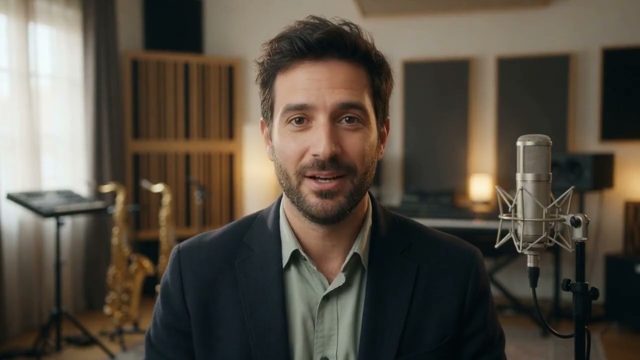
Thomas Hornig — a Henri Selmer Paris Artist, Professor of Saxophone at the Lebanese National Higher Conservatory of Music with 32 years of teaching, and Principal Saxophonist of the Lebanese Philharmonic Orchestra. More about the author.

Also from Thomas Hornig

SOFRA — the hands-free recipe app.

Beyond music, Thomas Hornig is the founder of SOFRA, a hands-free recipe app focused on authentic Middle Eastern cuisine — built for the kitchen, not the screen. Available now on Google Play and the App Store.

The same standard of craft that informs these pedagogy documents informs SOFRA.

▶ Get it on Google Play